






The outcomes teams like yours see with Tars

Convert
Between deciding to get help and sitting in the first session, there are four places practices lose people.
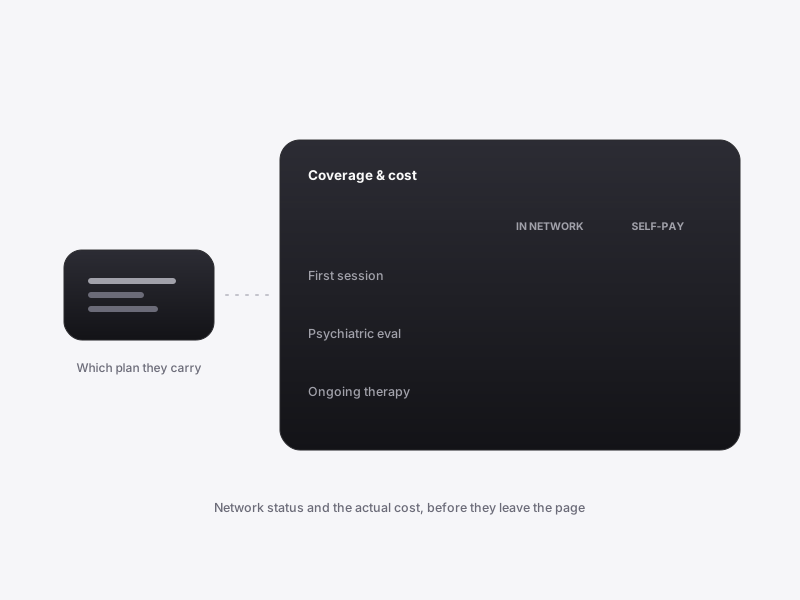
Settle the coverage and cost question before they leave the page
- Deciding was the hard part. The next question is smaller: do you take my insurance?
- The agent works from the payer list, plans, and self-pay rates you give it.
- It asks which plan they carry, then answers in network or out, and what a first session or an initial psychiatric evaluation costs.
- Real eligibility checks route to your billing team, plan and question already captured.
- Nobody leaves at the cost question without an answer, and the first session is still on the table.
Match the person to a clinician they will actually see
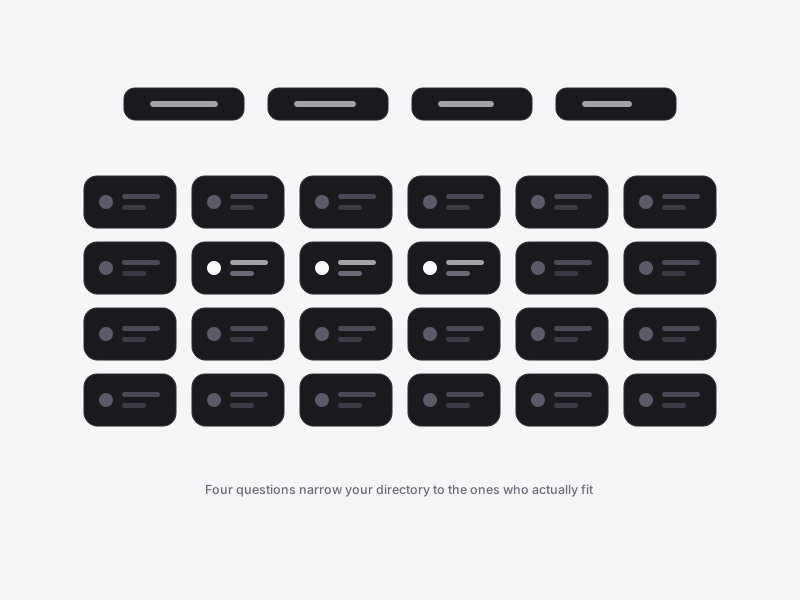
- "Find a therapist" is four questions at once: availability, specialty, modality, and fit.
- Your own clinician directory is the source: specialties, modalities, languages, telehealth or in person, current openings, and which prescribers take new patients.
- The agent asks the few questions that narrow it, then shows the clinicians who genuinely fit and the times they have.
- It never promises that a specific clinician is available, and it never answers a symptom description by naming one.
- More people land on a clinician who will still be their clinician in six months.
Capture the decision at the exact hour it gets made
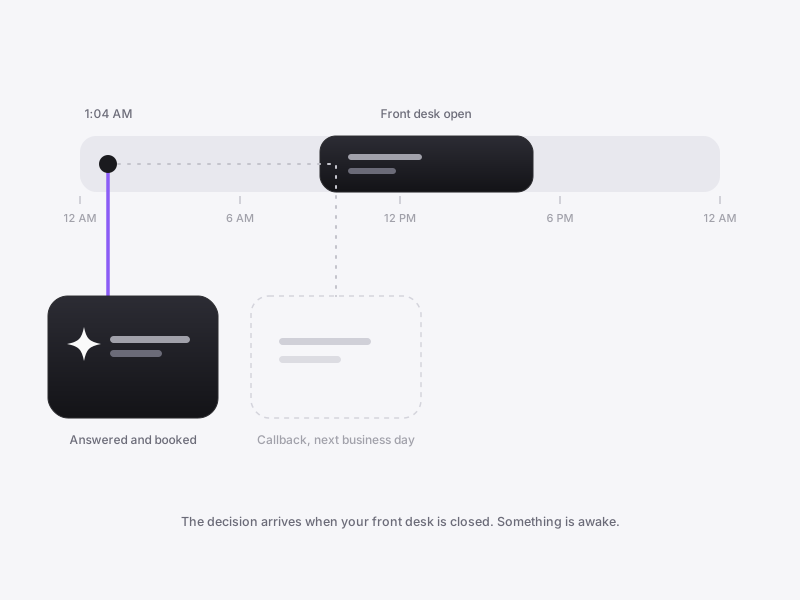
- The decision arrives at 1am on a Sunday. Your front desk is closed and the form promises a callback.
- Something is awake: the agent has the real conversation on the channel they arrived on.
- It books the first session, or captures a qualified record with the plan, the preference, the urgency, and the source attached.
- When someone is ready now, your team gets an alert with the full context.
- Weekend and after-hours demand stops expiring into voicemail, in a category where people contact the next practice on the list.
Bring back the person who read everything and booked nothing
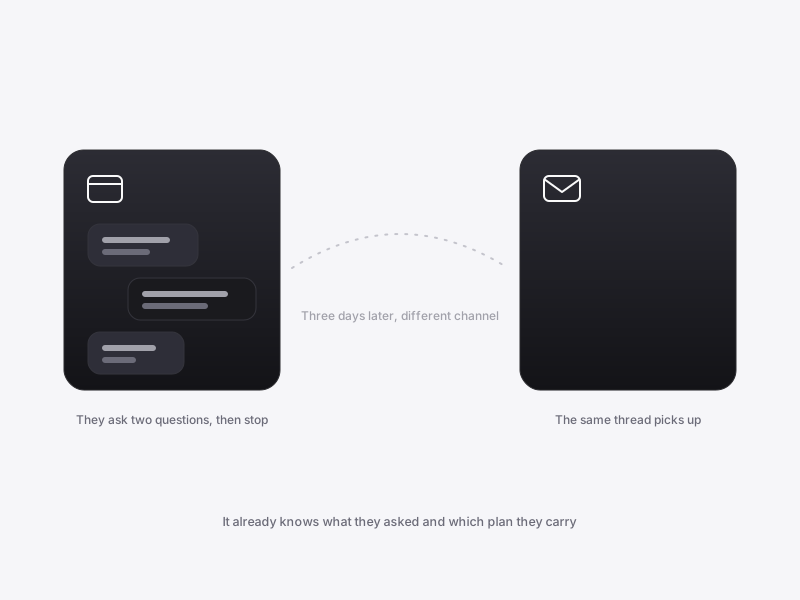
- People ask two good questions and then stop, to check with a partner or look at the deductible. That is not a lost lead.
- Channel is a property of each message, so a return visit reopens the same conversation.
- The agent already knows what they asked, which plan they carry, and which clinician they were looking at.
- You can follow up by email, SMS, or WhatsApp with the clinician's next opening or the cost they left to check.
- The people closest to starting stop falling out of the funnel.
Platform
Four things you have to be sure of before an AI agent talks to people about their mental health.
Decide in advance exactly what the agent is allowed to say
- You open the demo trying to break it. Name me a therapist for what I have.
- Getting a clinician, a plan, or a symptom wrong is a legal problem.
- The agent answers from your approved content and hands off anything outside it. No diagnosis, no treatment guidance.
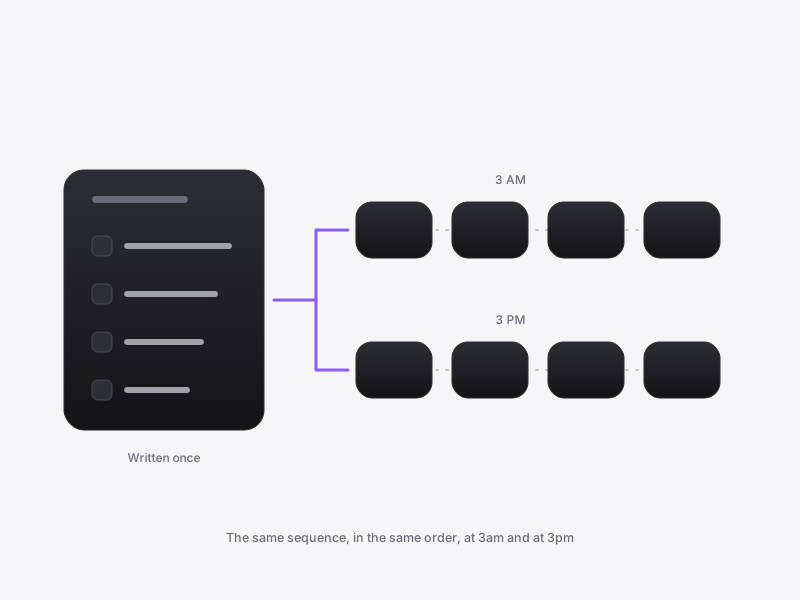
- Crisis response runs as a deterministic flow you write once: the 988 Suicide and Crisis Lifeline, intake stopped, a live person brought in, the same sequence at 3am as at 3pm.
- Your clinical lead can read the whole crisis path in one sitting and sign it.
Turn the conversation into a session on a real calendar
- Your conversion event is not a form submission. It is a first session on a specific clinician's calendar.
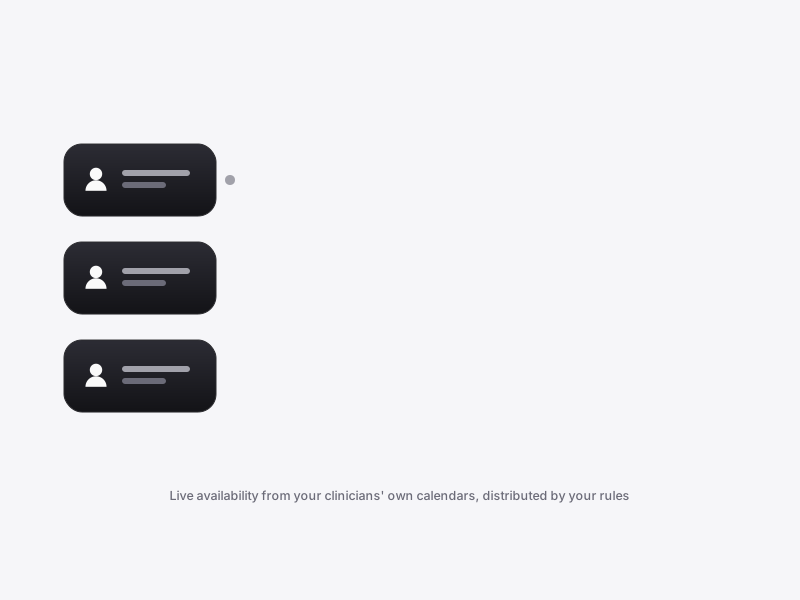
- Booking happens inside the conversation, against live availability from your clinicians' own Google or Outlook calendars.
- The agent books against your rules: session length, buffers, minimum notice, working hours, and the person's time zone.
- Multiple clinicians can be assigned round robin, least busy, or in a priority order you set, and each gets the conversation attached.
- Everyone gets a calendar invite, and the first session lands while the person is still resolved to go.
Trace every first session back to the campaign that paid for it
- You know the visits and the form fills. Which campaigns produced people who actually started therapy is the gap.
- One analytics home shows conversations, engagement, escalations, and conversion, each compared against the previous period.
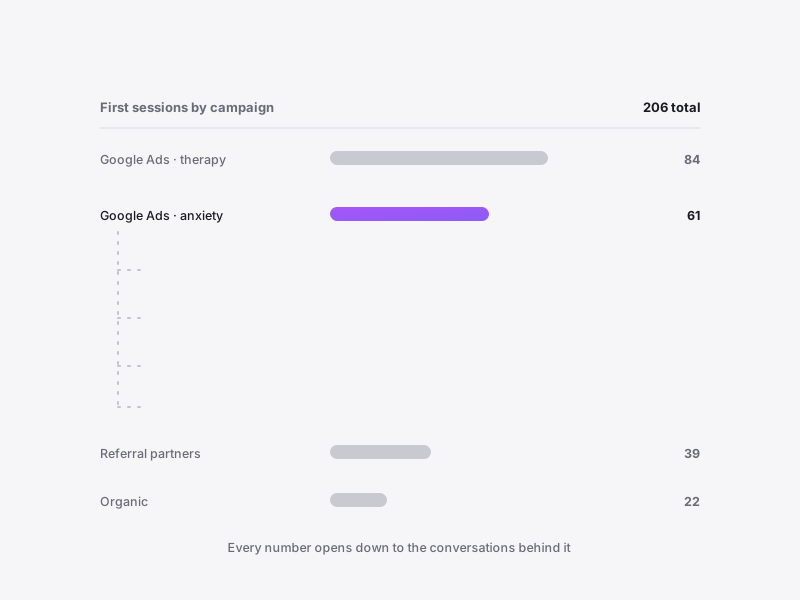
- Attribution breaks results down by campaign, UTM source, and landing page, so you see which spend produces booked first sessions, not conversation counts.
- Bookings count only when the write to your CRM went through, and every number is clickable to the individual conversation.
- Walk into a budget review with the first sessions and the campaigns that paid for them.
Prove the agent behaves before a single person sees it
- Your clinical lead tries to break it, and legal asks what happens on the worst day.
- Tars runs that review as a product step, so your reviewers sign off on what they watched the agent do.
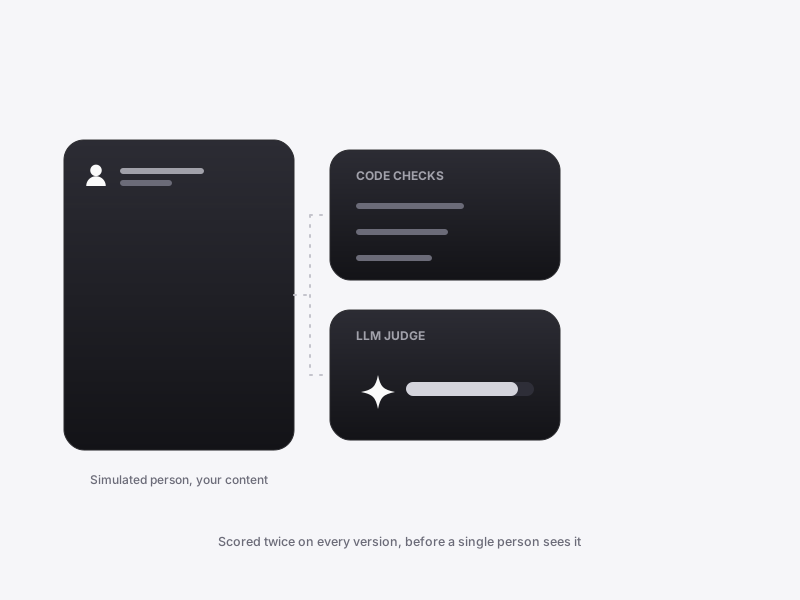
- Simulated people, driven by personas and goals from your content, hold multi-turn conversations with your actual agent.
- The crisis path and the clinical boundary rules are scored on every version, by code checks and by an LLM judge.
- Deploy when the scores clear your threshold, then keep improving on the questions people actually ask.
How Tars Agents Get Better

The healthcare acquisition flywheel
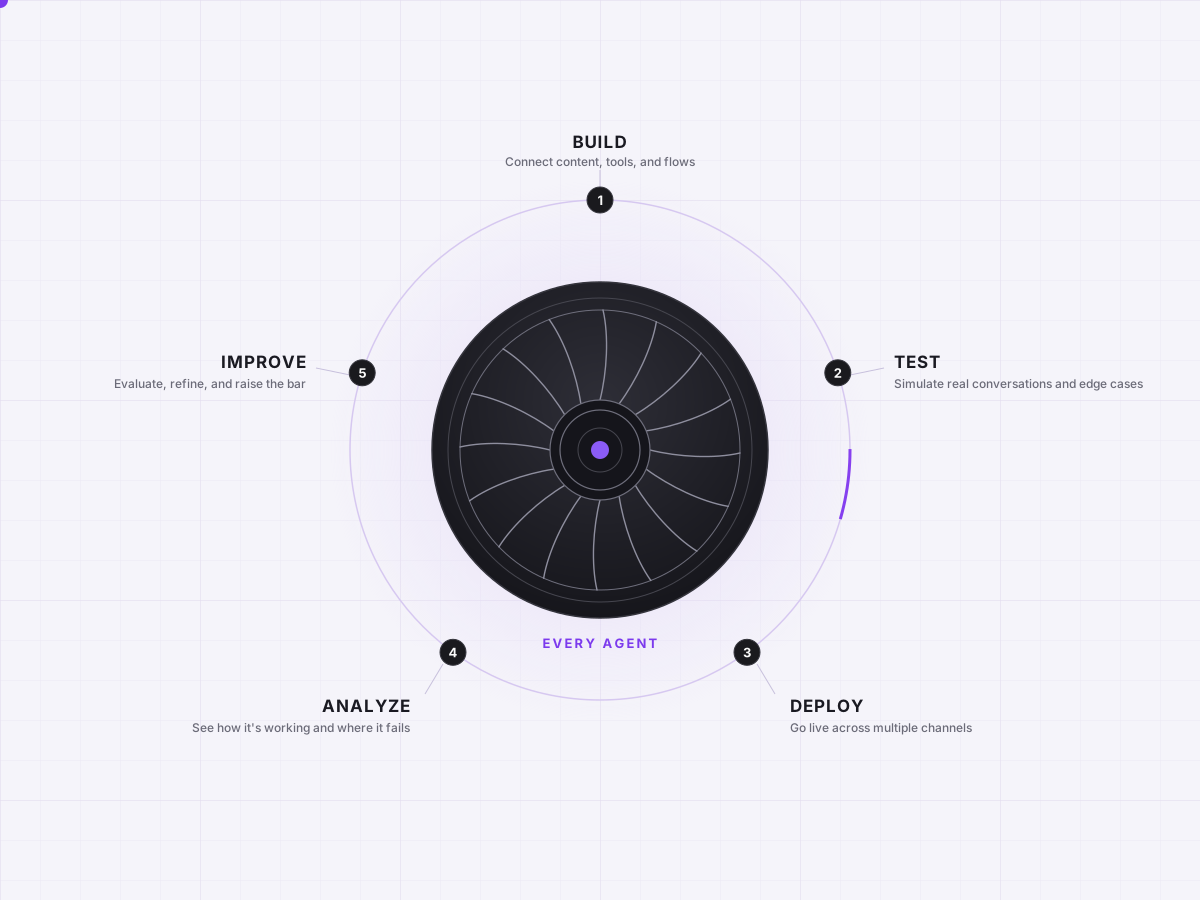
Putting an agent in front of people asking about care is not a click-a-button decision. Your clinical, legal, and marketing leads all have to sign off first. Tars closes the loop end to end. Train, test, deploy, learn, improve. More inquiries answered and more first appointments booked with every cycle.
Step 1: Train
Connect your service lines, locations and provider directory, accepted payers, pricing and policy pages, intake criteria, and past inquiry history. Set the guardrails and the exact wording for sensitive topics. The agent presents your care the way your best intake coordinator does, from your content and your rules.
Step 2: Test
Run simulated inquiries against the agent before launch, including the ones your reviewers are most worried about. Your escalation protocol and clinical-boundary rules become standing evaluators, so you see how the agent behaves on the hard cases before a single visitor does.
Step 3: Deploy
Go live on web, WhatsApp, SMS, and email when the scores clear your threshold, with booking and CRM write-back switched on from day one.
Step 4: Get Insights
See where inquiries drop off, which campaigns and landing pages produce booked appointments, and how conversion differs by location and service line. Every number opens down to the individual conversation behind it.
Step 5: Improve continuously
Close the gaps, re-test, and raise booked appointments month over month. Each cycle converts more of the traffic you are already paying for.



.png)
%201.png)
%201.png)