


Categorizer AI
Intent recognition engine that routes conversations dynamically based on what users actually mean, with built-in safeguards against misrouting.






.png)
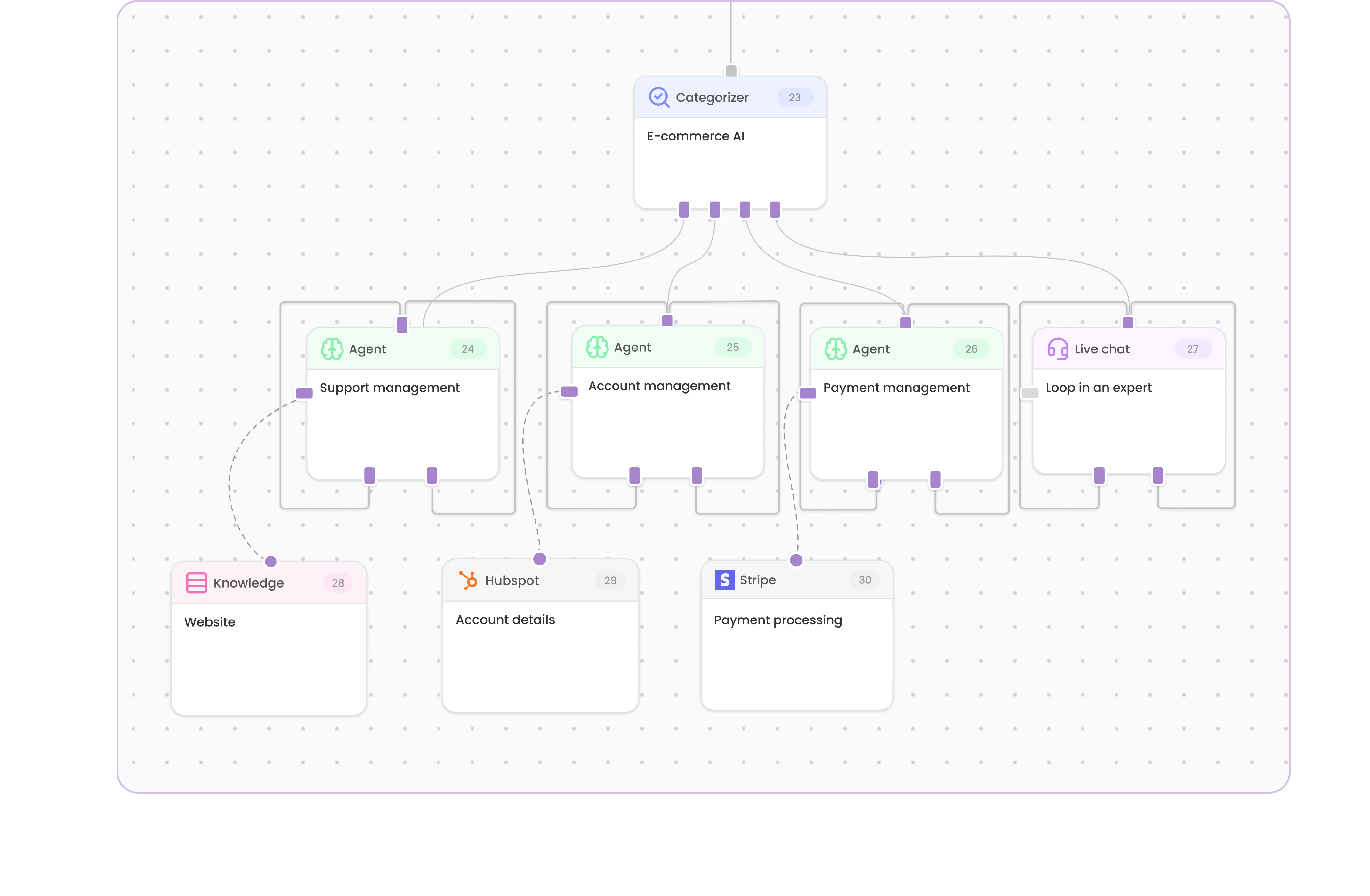
Users don't speak in dropdown menus. "I need my money back," "Can I get a refund?" and "How do I cancel and get charged back?" all mean the same thing. Our Categorizer processes input semantically, understanding intent rather than matching keywords. Create categories like "Refund Request" or "Technical Support," and the system routes users to the right conversation flow based on what they're actually asking for.
One Categorizer gambit handles multiple user journeys. Billing questions route to payment flows. Password resets trigger technical support paths. Product inquiries connect to sales conversations. Define your categories, connect them to specific flows, and let user intent determine the path forward. No rigid decision trees. No brittle keyword matching.
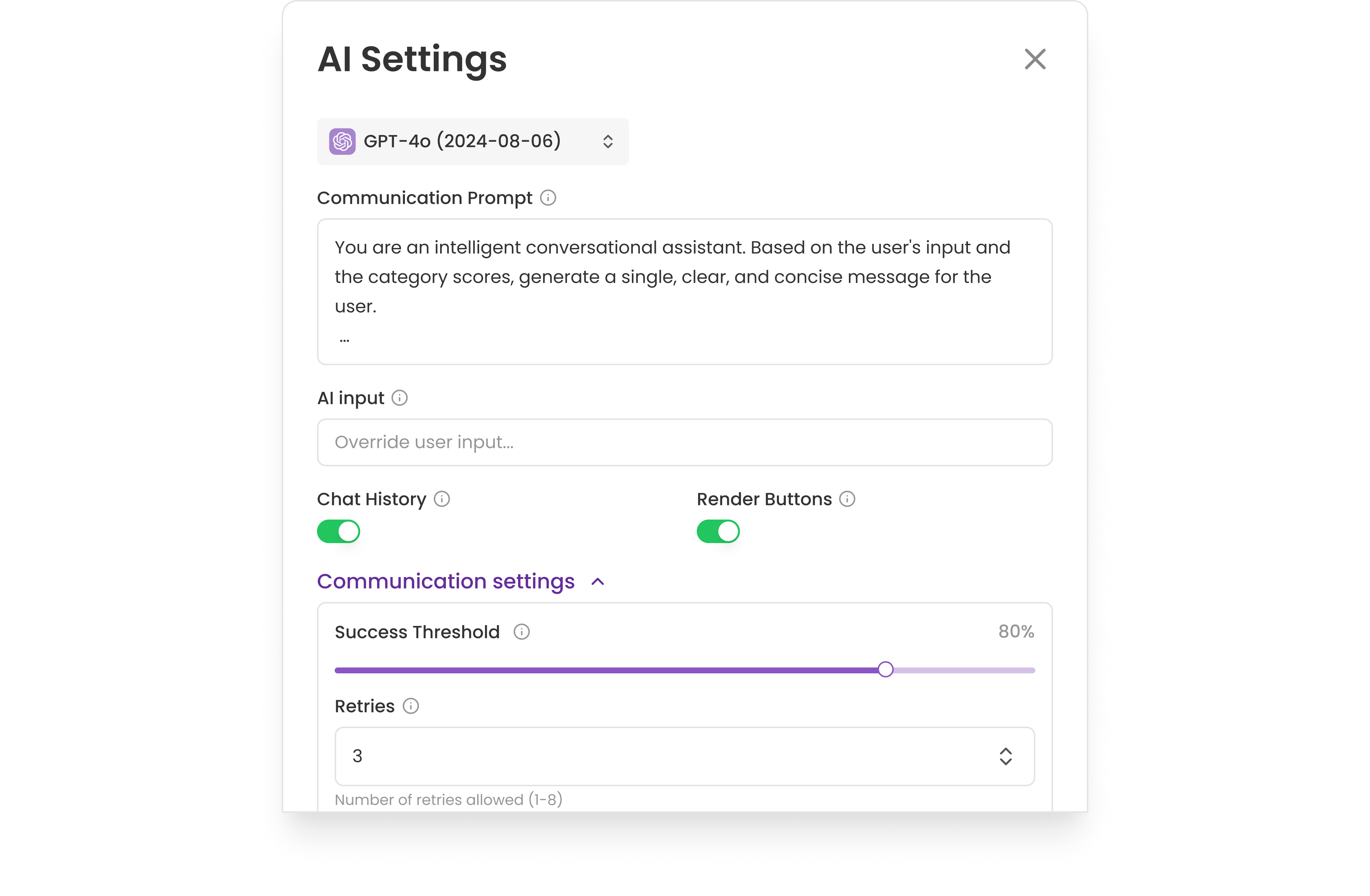
The system evaluates every input against all defined categories and assigns confidence scores. High confidence means immediate routing. Medium confidence triggers clarification. The scoring prevents misrouting by acknowledging uncertainty instead of forcing a guess. Test your categories before deployment, identify gaps in real time, and set confidence thresholds that match your tolerance for accuracy.
If multiple categories score similarly, the system checks whether they connect to the same branch. Same destination? Route directly, no need to ask. Different destinations? Present options as clickable buttons so users can clarify their intent without retyping. When confidence is genuinely split, your AI Agent asks instead of assumes.
Users can't get stuck. If the system fails to confidently categorize after the configured number of retries, input switches to button-only mode. The user selects from presented categories rather than endlessly rephrasing. This fallback ensures every conversation progresses, even when semantic matching struggles with ambiguous or unusual phrasing.
Create, update, and delete categories directly inside the Gambit. No CSV uploads. No external Knowledge Bases. No manual linking between intents and flows. Add a new category, name it clearly, connect it to the appropriate workflow, and it's live. Changes take effect immediately with no redeployment lag.
Helps citizens report municipal service issues like potholes, graffiti, and missed trash collection by creating official work orders for city crews. It also provides status updates and general information about city services.

Helps employees find guidance on IT issues and provides troubleshooting steps. If the issue is unresolved, it raises a ticket for IT support.

Sits at your hospital entrance to help patients find the right specialist and room number based on symptoms, providing step-by-step directions and reducing front desk inquiries.

Educates on plans, services, pricing, and perks, then collects user data and takes the user to a placeholder payment gateway once they have chosen a service.

Educates customers about credit card options through targeted questions about their credit situation and spending habits, then recommends the best-fit product with detailed reward calculations and application guidance.

Collects customer information and problem details to provide accurate cost estimates for plumbing, electrical, and HVAC services, then creates work orders for expert callbacks.













Connect with tools where your data lies


Privacy & Security
At Tars, we take privacy and security very seriously. We are compliant with GDPR, ISO, SOC 2, and HIPAA.


Email - sales@hellotars.com


.png)
%201.png)
%201.png)


