




The outcome?
Your customers want answers, not ticket numbers
Your customers have questions, but the answers are scattered across your website, help docs, and PDFs, and they don't know where to look. Meanwhile, your support team spends its day answering the same five questions instead of solving the problems that actually need a person.

With a Tars AI agent trained on your content, customers get accurate answers and grievance support in seconds, at 2 pm or 2 am, on the channel they're already using. CSAT improves by default when customers stop hearing "just hang in there, I'll get back to you."

AI agents are not the rigid chatbots you may have tried before. They understand context and handle open-ended questions. Instead of matching keywords and returning something vaguely related, they grasp what your customer actually means and respond in a way that genuinely helps.

And when complexity hits, like bugs, nuanced policy decisions, or frustrated customers who need a person, your AI agent hands the conversation to your team with the full context attached. There is nothing worse than an angry customer being asked to repeat the problem. In Tars, they never are.
Built for accurate, reliable customer service automation
One conversation. Your AI and your team, together.
In Tars there is no separate live-chat inbox. The AI agent and your support team work in the same conversation. The agent resolves what it can, and when something needs a person, it hands over with the whole story attached: what the customer asked, what the agent answered, what's still open.
Your team reads the thread, not a summary. Your customer never repeats themselves. And your team can watch any conversation live and step in at any moment.
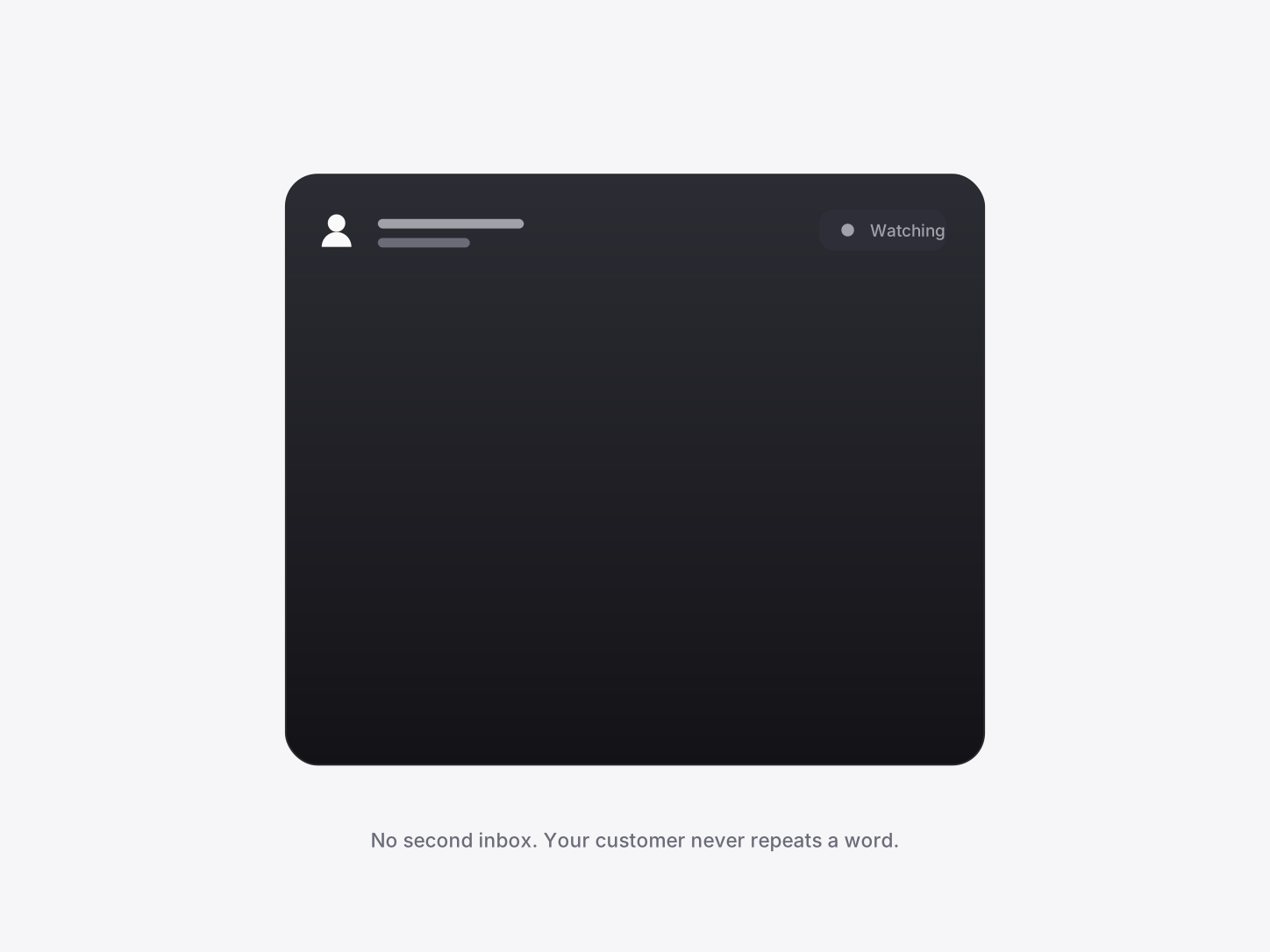
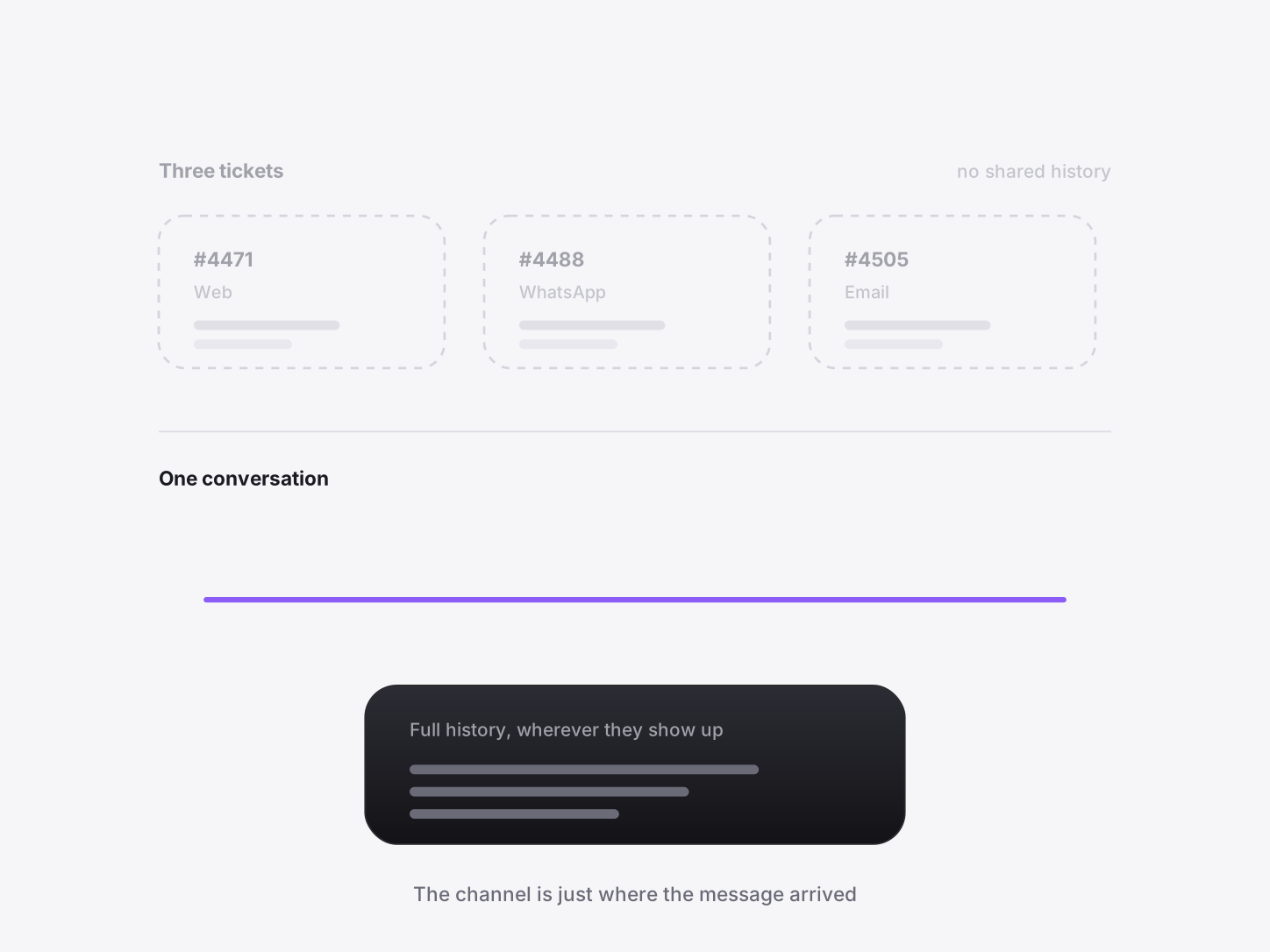
The conversation follows your customer. Web today, WhatsApp tonight.
A customer starts on your website at lunch, replies on WhatsApp after dinner, and gets the confirmation by email. In Tars, that's one conversation, not three tickets.
The agent and your team see the full history wherever the customer shows up. The channel is just where the message arrived.
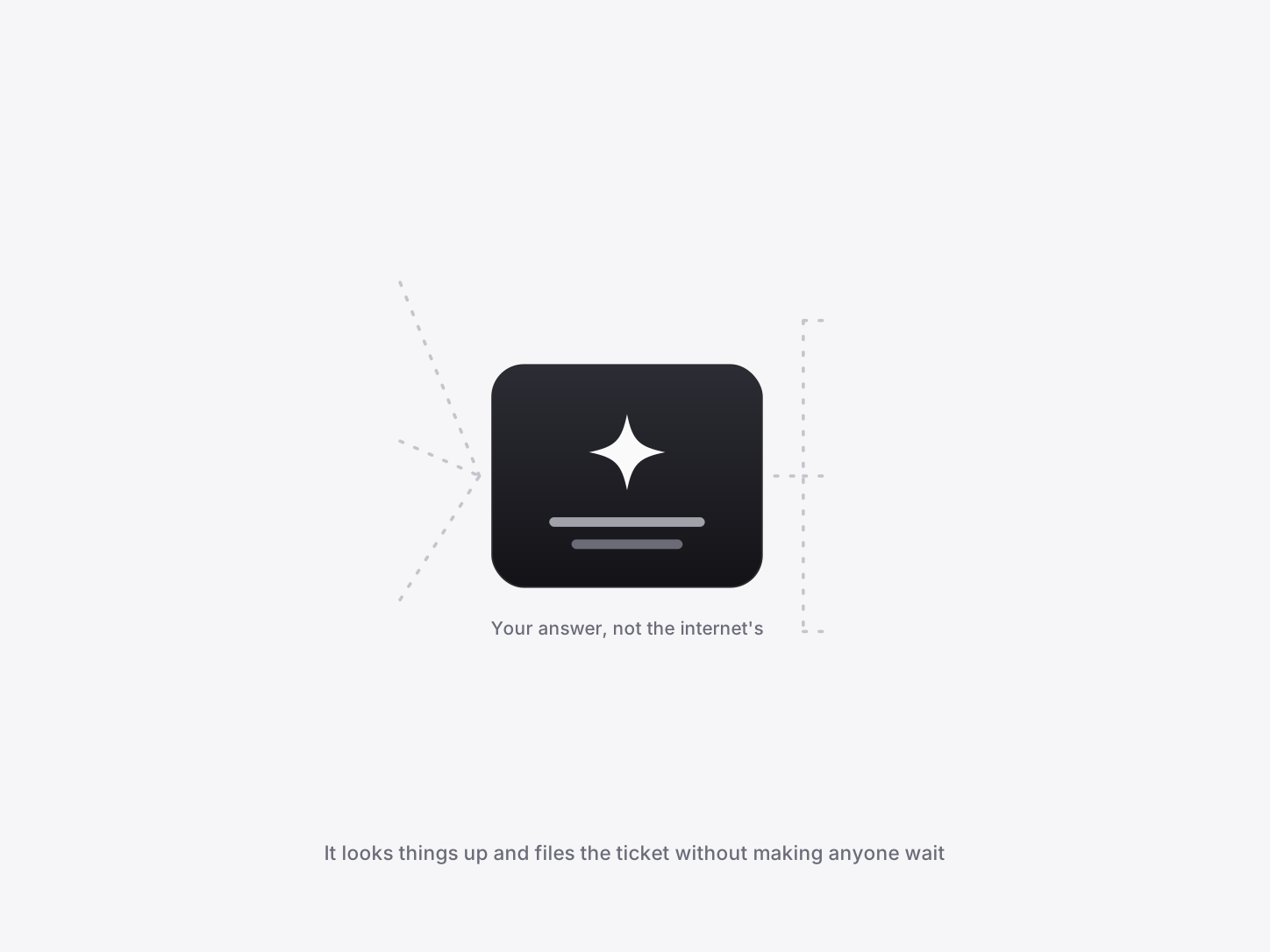
Answers from your content. Actions in your systems.
The agent answers only from content you've approved: your help center, your policies, your product pages. Customers get your answer, not the internet's.
And it doesn't stop at answering. Mid-conversation, the agent looks up the order, checks the account, and files the ticket in Zendesk, Salesforce, Intercom, or whatever your team runs on, without making the customer wait.
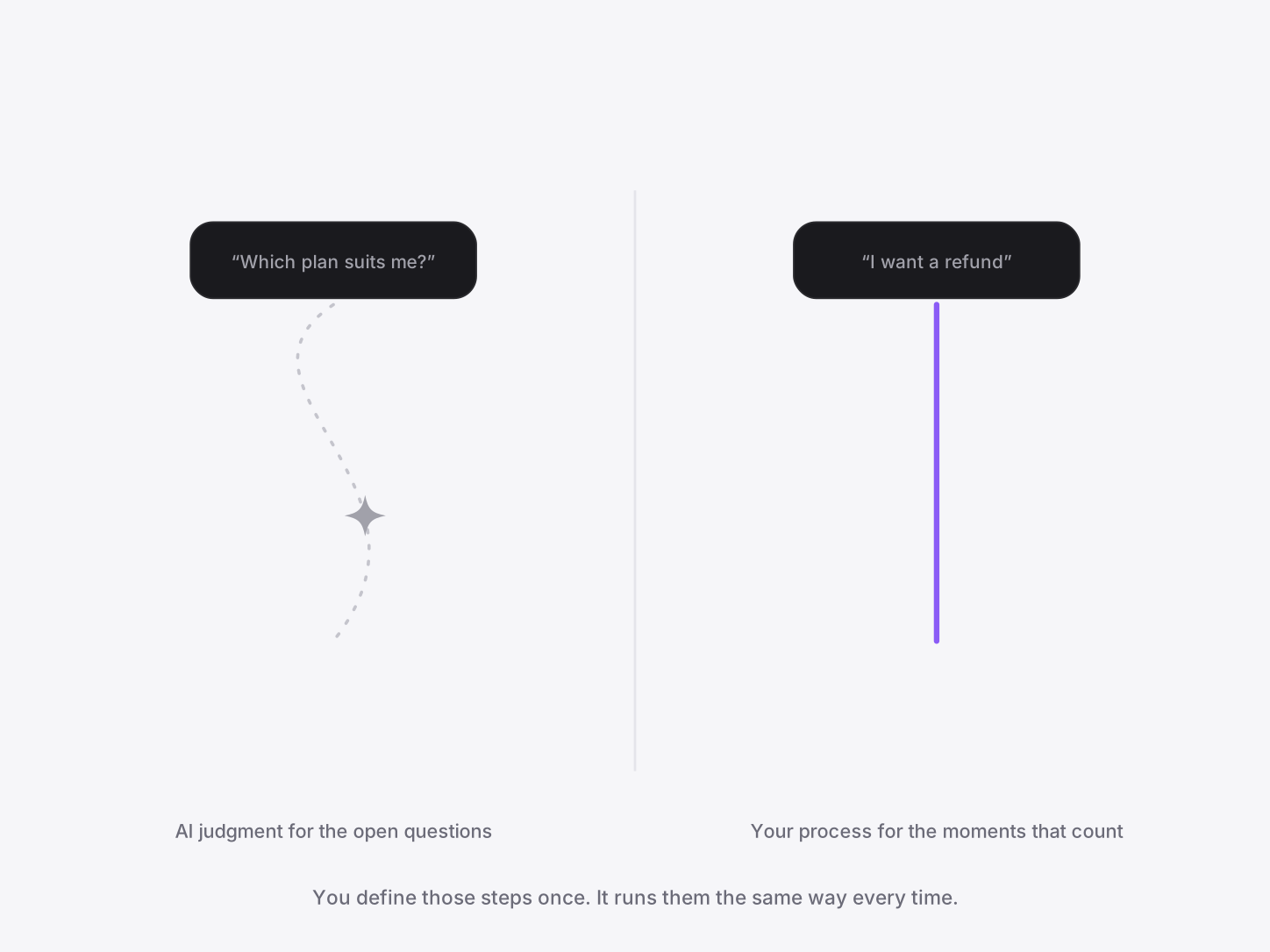
When it matters, the agent follows your process exactly.
Some conversations can't be improvised: identity checks, refunds, anything with a regulator on the other end. In Tars, you define those steps once, and the agent runs them exactly as written. Every time.
AI judgment for the open questions. Your process for the moments that count. That's how B2C teams in banking, insurance, and healthcare deploy AI without losing sleep.

How Tars Agents Get Better

The support agent flywheel
Building a support agent your customers actually trust isn't a "click a button, your agent is ready" story.
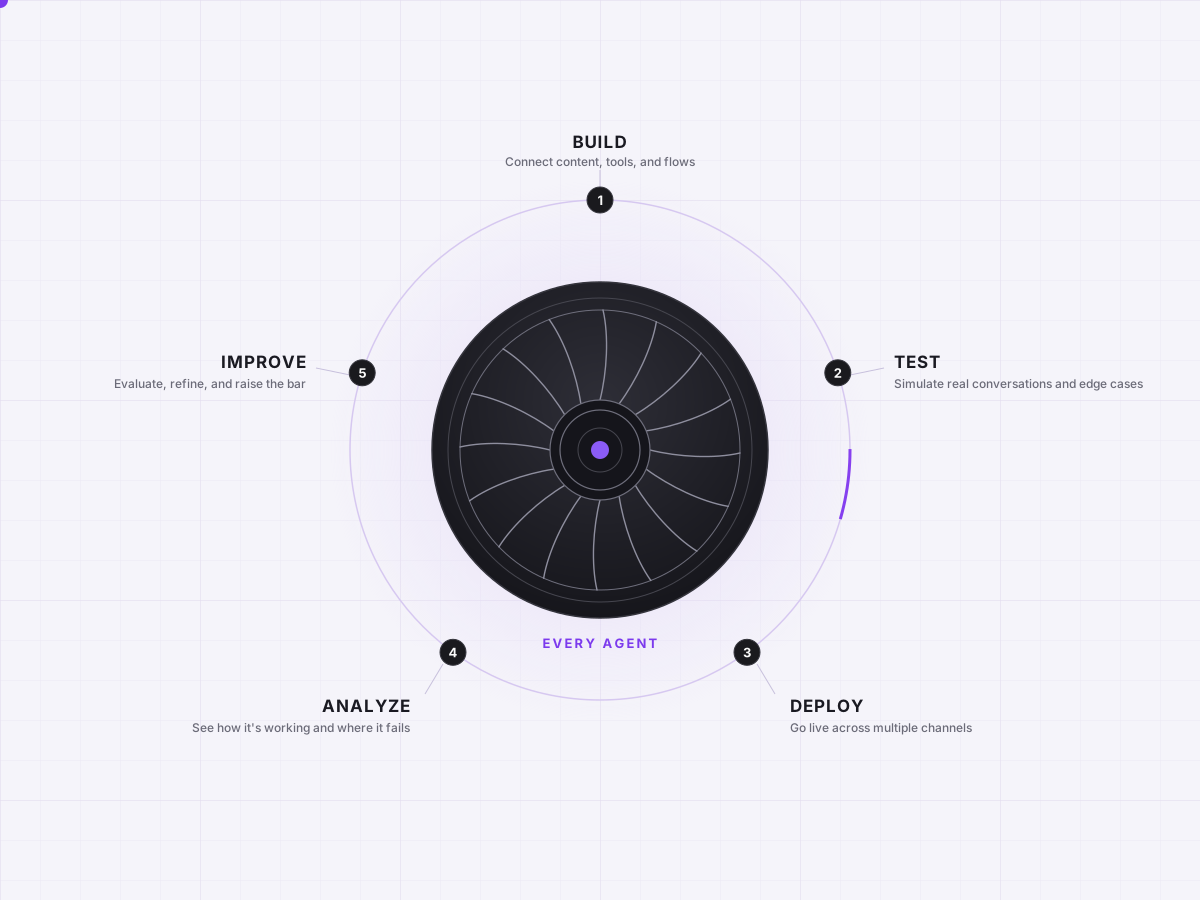
Tars closes the loop end-to-end. Train, test, deploy, learn, improve. More questions get resolved instantly, and fewer tickets reach your team, with every conversation.
Step 1: Train
Connect your help center, policy docs, and past conversations. The agent learns your products, your processes, and the way your customers actually ask. Tools, prompts, and deterministic flows are configured to your support operation, not a generic template.
Step 2: Test
Simulate end-to-end conversations against real customer questions and personas before a single customer touches the agent. Annotate failures, turn each failure mode into an evaluator, and validate it against a human-labeled set so you can trust it in production.
Step 3: Deploy
Go live on web, WhatsApp, email, and SMS with the evaluators running on every real conversation. Code-based evaluators measure what's measurable; LLM-as-judge evaluators score the subjective parts. Every conversation gets bucketed into pass, fail, or a specific failure mode.
Step 4: Get Insights
See exactly which questions the agent struggles with, why escalations happen, and which conversations resolve instantly. Cohort-based analysis tracks whether a fix actually moved resolution rates in production, not just in a test set.
Step 5: Improve continuously
Fix the failure modes the system surfaces. Add new evaluators as your bar rises. Each loop resolves more, escalates less, and raises the floor, so the agent gets meaningfully better not from a model upgrade, but from the loop itself.
Customer support that speaks your industry


Explore AI Agents and tweak them to your needs
Citizen Service Agent
Helps citizens report municipal service issues like potholes, graffiti, and missed trash collection by creating official work orders for city crews. It also provides status updates and general information about city services.

IT Support Agent
Helps employees find guidance on IT issues and provides troubleshooting steps. If the issue is unresolved, it raises a ticket for IT support.

Hospital Lobby Navigation Agent
Sits at your hospital entrance to help patients find the right specialist and room number based on symptoms, providing step-by-step directions and reducing front desk inquiries.


Real results, real customers, real stories












Frequently asked questions
What happens when the AI can't answer?
It hands the conversation to your team with the full thread attached, not a summary. You define the escalation rules: topics, sentiment, customer tier, or simply "the agent isn't confident." Customers never get stuck in a loop.
How long does it take to go live?
Weeks, not quarters. Connect your content, test the agent against real past questions, and launch when accuracy meets your benchmark. Most teams run their first live conversations within the first month.
Does it work with our helpdesk and CRM?
Yes: Zendesk, Salesforce, Intercom, and most major support stacks, plus APIs for anything custom. The agent doesn't just log tickets; it acts in those systems mid-conversation.
Is our customer data safe?
Tars is SOC 2 Type 2, HIPAA, ISO 27001, and GDPR compliant. You control what the agent can access, and PII handling is built for regulated industries.
How do we know it's accurate before launch?
You test it. Run the agent against real questions from your history and score every answer before a single customer sees it. Launch on evidence, not hope.
How is this different from the chatbot we tried years ago?
That chatbot matched keywords and broke the moment a customer phrased something differently. A Tars AI agent understands what the customer means, answers from your approved content, takes action in your systems, and hands off to your team in the same thread when it should.
Connect with tools where your data lies


Privacy & Security
We’ll never let you lose sleep over privacy and security concerns
At Tars, we take privacy and security very seriously. We are compliant with GDPR, ISO, SOC 2, and HIPAA.


.png)
%201.png)
%201.png)


