






The outcomes teams like yours see with Tars
Purpose-built AI agents for behavioral health

Convert
Turn the traffic you already pay for into booked first appointments.
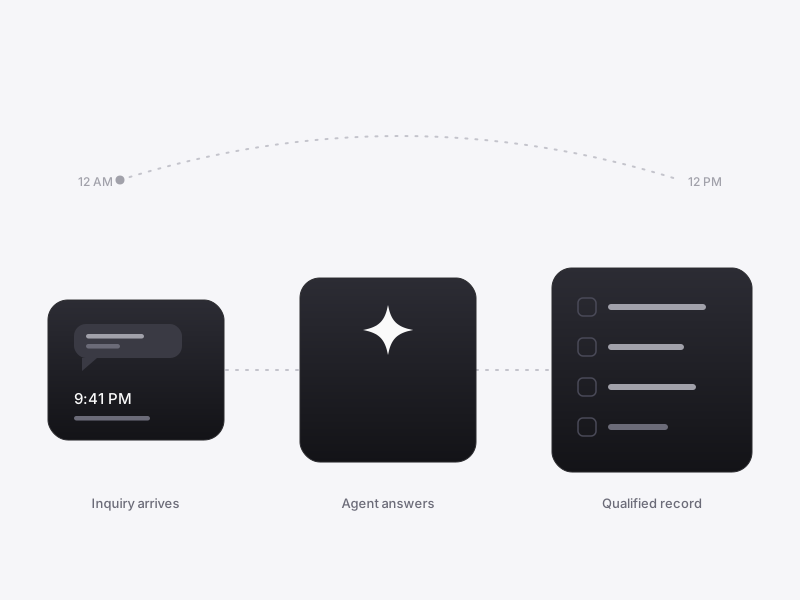
Capture and qualify new-patient inquiries around the clock
- Your Friday 9pm inquiry gets answered Friday at 9pm instead of Monday morning.
- The agent asks what your intake coordinator would ask: service line, insurance, availability.
- It runs on your website, WhatsApp, SMS, and email, all in one thread.
- Every inquiry lands in Salesforce or HubSpot as a structured record, transcript and source attached.
- Industry data puts a five-minute first response at roughly nine times the conversion of waiting.
Answer "is this covered?" in the conversation
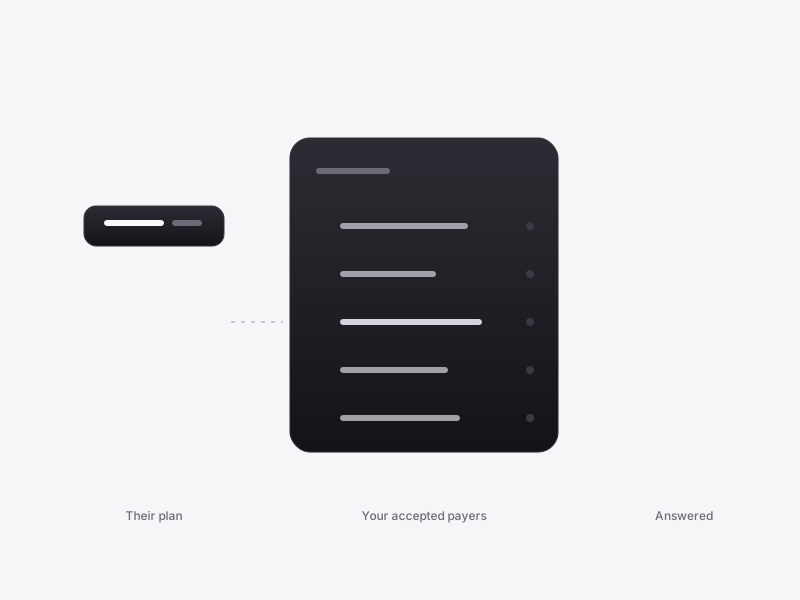
- Coverage decides whether a visitor becomes your patient. The agent answers it on the spot.
- It checks their plan against the payers you actually accept.
- In network or out, prior authorization, what self-pay looks like: answered from your published policies before they leave the page.
- Anything needing real verification reaches your revenue cycle team with the details already gathered.
- Fewer people vanish at the money question, and the ones who reach you arrive ready.
Match inquiries to the right location, provider, and level of care
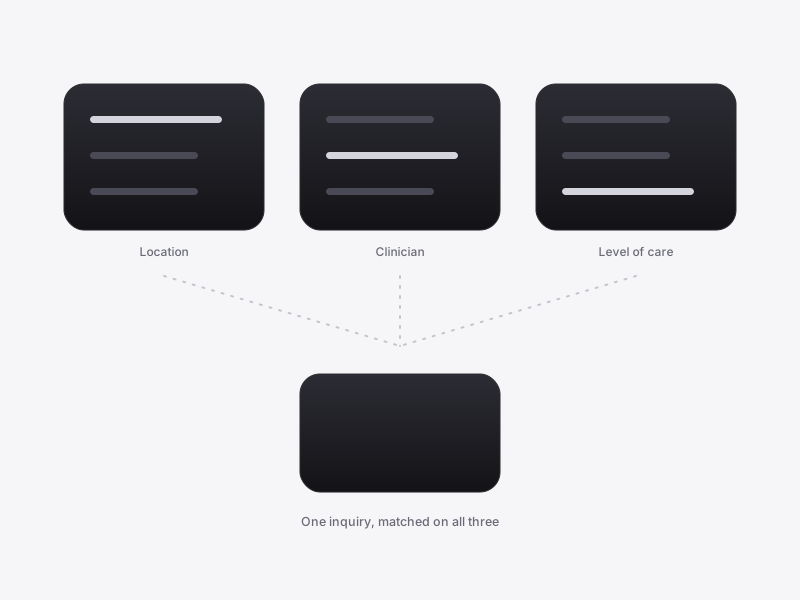
- Someone asks for a therapist near them who takes their plan and can start soon.
- The agent works from your own directory: locations, clinicians, specialties, current availability, and asks your qualifying questions in your order.
- Level-of-care suggestions follow the criteria your clinical team defines.
- Anything at the edge of those criteria goes to a person on your team.
- Inquiries land at the site and program that can take them, instead of bouncing between your locations.
Educate and nurture the people who are not ready yet
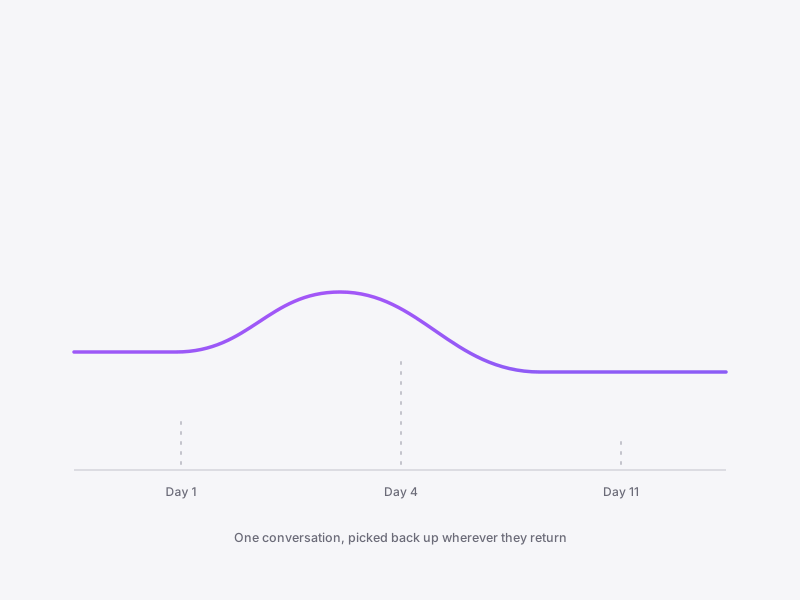
- Premium and cash-pay care is a considered decision. Most people need more than one conversation.
- The agent does the education work on whichever channel they arrived on.
- When they return days later by email or SMS, the same thread picks up where it left off.
- You can reach back out with the one answer that was missing.
- Amen Clinics runs a Tars agent to answer inquiries around the clock, including the hours when there was no way to reach them before.
Platform
Everything your clinical, legal, and marketing leads need to say yes.
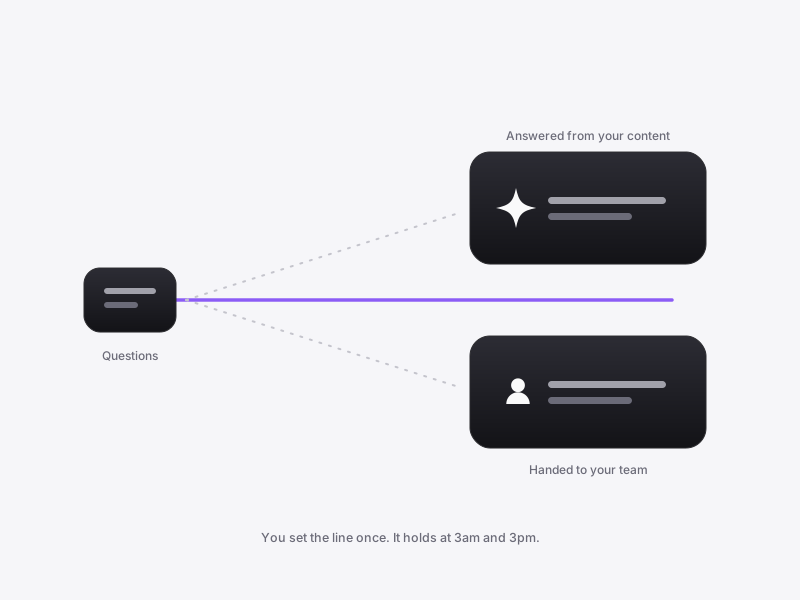
Set the guardrails once, then watch the agent hold them
- Your reviewers will try to break it before your patients do. Let them.
- It answers only from content you approve. Outside that scope, it says so and hands off.
- No diagnosis, no assessment, no treatment guidance. Operational, never clinical.
- Crisis language triggers your protocol: 988 surfaced, intake stopped, a live person brought in, identical at 3am and 3pm.
- Your clinical and legal reviewers read one written protocol and know what a visitor hears.
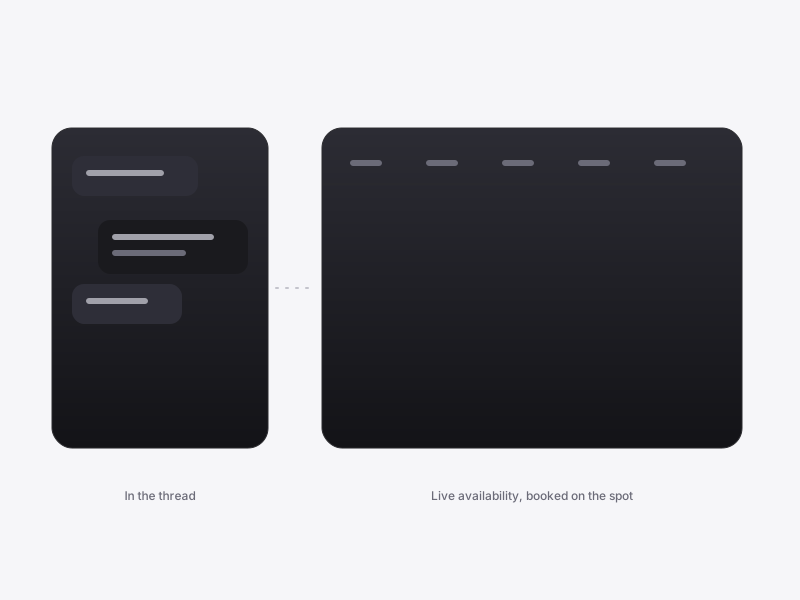
Book the appointment inside the conversation
- No booking links. A booking card appears right in the thread.
- Live availability from your team's own Google or Outlook calendars, so nothing offered is already taken.
- Your rules: duration, buffers, notice, working hours, round robin or priority order.
- The agent qualifies while it books and never asks for anything twice.
- They get a real calendar invite. Your coordinator gets the booking with the whole conversation attached.
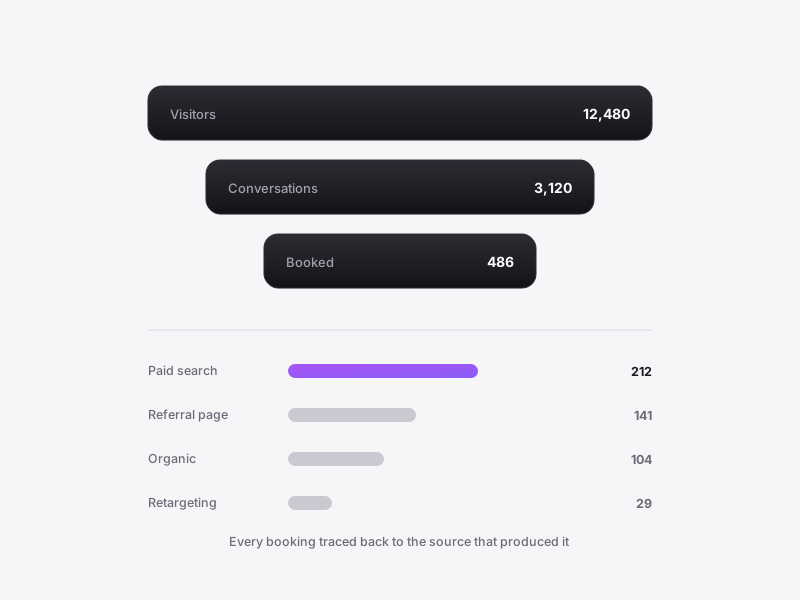
See which campaigns produce booked appointments
- Your budget review asks which campaigns produced appointments. Right now the answer is a guess.
- Funnels run from visitors to conversations to qualified completions.
- Lead sources break out by UTM source, campaign, and landing page, each with its own conversion rate.
- A booking counts only when the write to your CRM actually went through, and every number clicks down to the conversation behind it.
- You leave with which sources produce booked appointments, not just conversations.
Launch on evidence, not on hope
- Your worst-case inputs meet the agent in a test environment, long before anyone in distress does.
- Simulated users run full conversations against your actual agent, built from your content and real transcripts.
- Every test is scored twice: deterministic code checks and LLM judge evaluators.
- Your crisis protocol and clinical boundaries become standing tests, rerun on every change.
- You deploy when the scores clear your threshold. After launch, real conversations feed the same loop.
.svg)
How Tars Agents Get Better

The healthcare acquisition flywheel
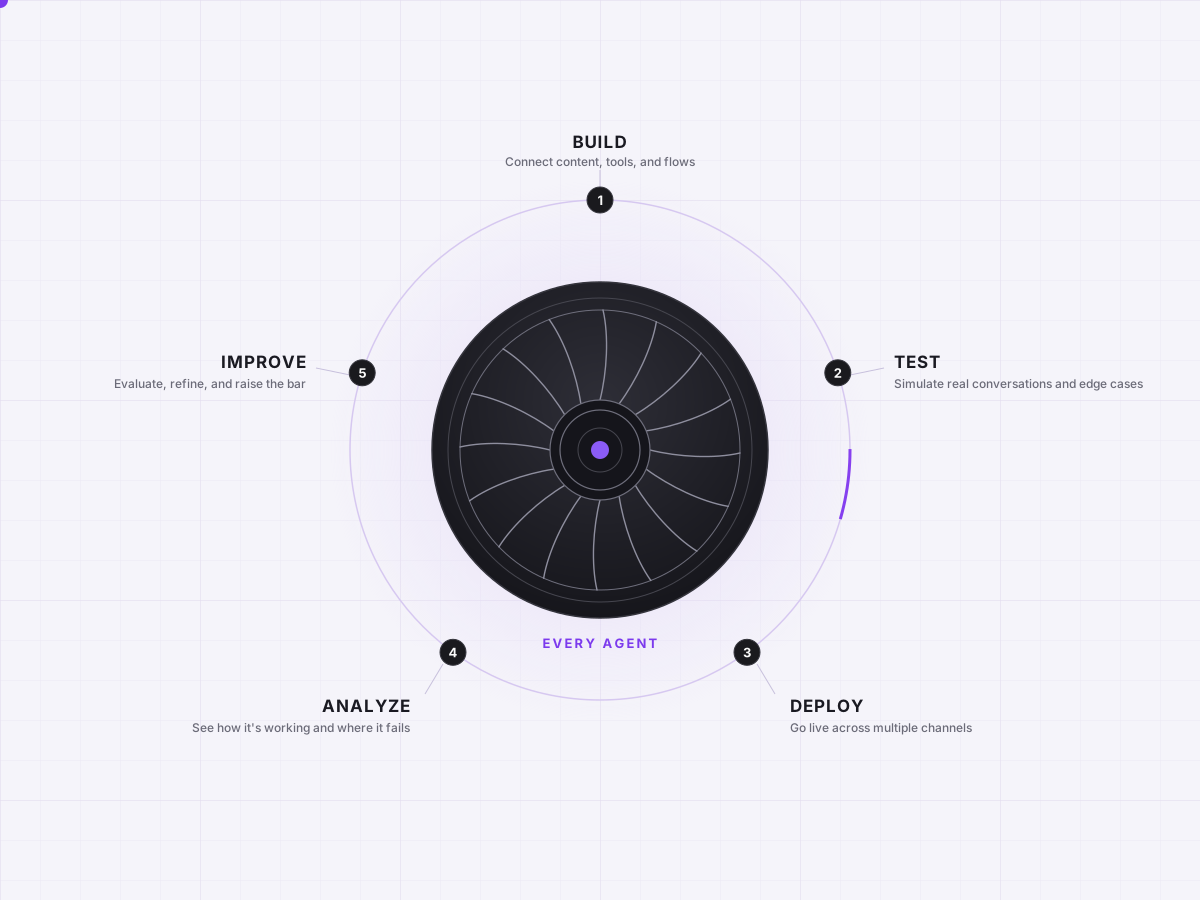
Putting an agent in front of people asking about care is not a click-a-button decision. Your clinical, legal, and marketing leads all have to sign off first. Tars closes the loop end to end. Train, test, deploy, learn, improve. More inquiries answered and more first appointments booked with every cycle.
Step 1: Train
Connect your service lines, locations and provider directory, accepted payers, pricing and policy pages, intake criteria, and past inquiry history. Set the guardrails and the exact wording for sensitive topics. The agent presents your care the way your best intake coordinator does, from your content and your rules.
Step 2: Test
Run simulated inquiries against the agent before launch, including the ones your reviewers are most worried about. Your escalation protocol and clinical-boundary rules become standing evaluators, so you see how the agent behaves on the hard cases before a single visitor does.
Step 3: Deploy
Go live on web, WhatsApp, SMS, and email when the scores clear your threshold, with booking and CRM write-back switched on from day one.
Step 4: Get Insights
See where inquiries drop off, which campaigns and landing pages produce booked appointments, and how conversion differs by location and service line. Every number opens down to the individual conversation behind it.
Step 5: Improve continuously
Close the gaps, re-test, and raise booked appointments month over month. Each cycle converts more of the traffic you are already paying for.



.png)
%201.png)
%201.png)