






The outcomes teams like yours see with Tars
Purpose-built AI agents for physical therapy

Convert
Capture the demand that never survives the gap between the referral and the first visit.
Convert physician referrals into booked evaluations
- Your patient leaves the surgeon's office with a referral and starts looking that evening.
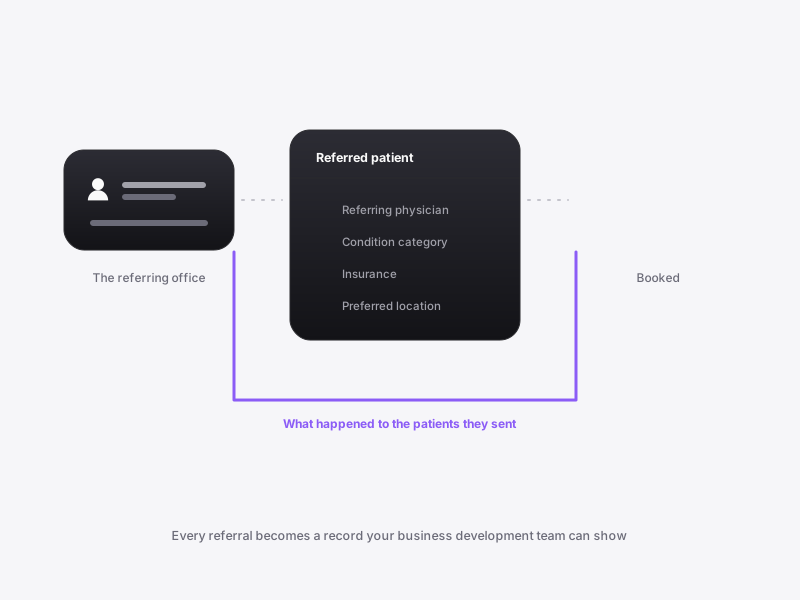
- The agent recognizes a referred patient and collects the referring physician, condition category, insurance, and preferred location.
- It books the evaluation into your connected calendar, or hands the request to that clinic with everything already gathered.
- Every conversation writes a structured, source-attributed record into Salesforce or HubSpot.
- Your business development team can show a surgeon's office what happened to the patients they sent.
Capture direct-access and after-hours patients around the clock
- A weekend sports injury and a 9pm direct-access inquiry both arrive when the phone rings out.
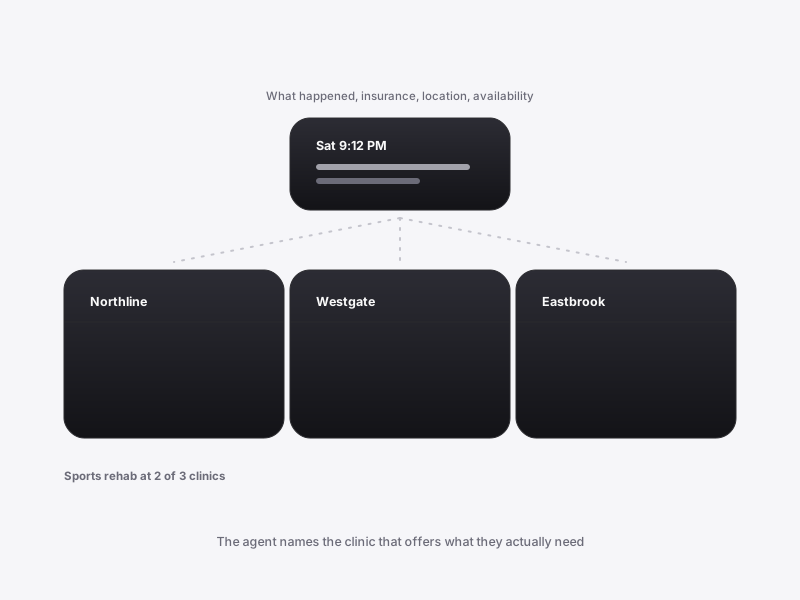
- The agent has the conversation your front office would have: what happened, their insurance, their location, their availability.
- It names the clinic that offers what they need: hand therapy, vestibular, sports rehab, or post-surgical care.
- Web, WhatsApp, SMS, and email, at any hour, on a surface you own.
- New patient visits your group used to lose overnight now get captured.
Win back the revenue sitting in the plans of care you already sold
- A patient you converted is only worth the visits they actually complete.
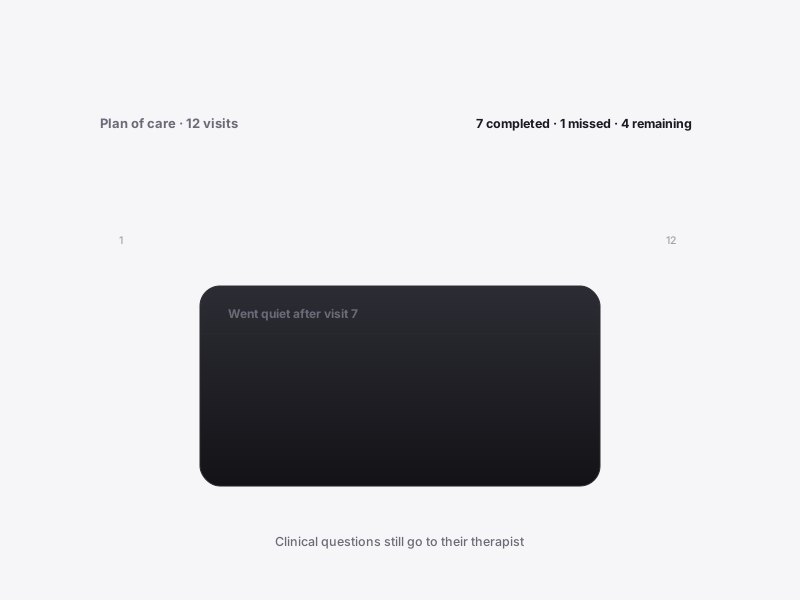
- Most patients miss visits, and every missed visit is revenue you already earned and did not collect.
- When your systems pass the signal through, by API or webhook, event-triggered campaigns reach patients who go quiet mid-plan, on SMS or WhatsApp.
- The agent answers what is actually stopping them and puts the next visit back on the calendar. Clinical questions go to their therapist.
- More completed visits per patient won, which is more revenue per patient won.
Run employer, workers' comp, and auto-injury demand in its own lane
- A workers' comp case comes in at 7pm and goes to whoever responds first.
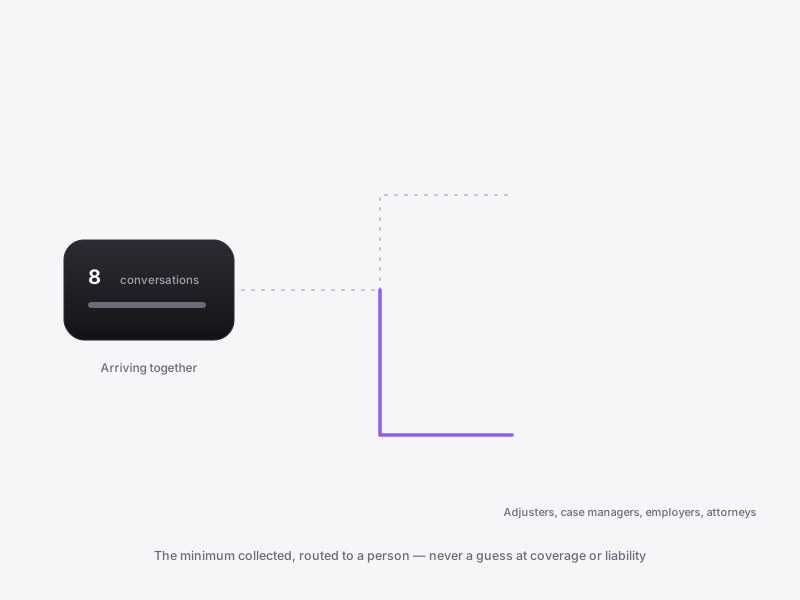
- Adjusters, case managers, employer contacts, and attorneys' offices arrive alongside your consumer patients.
- The agent tells them apart from a new consumer patient and handles them in their own lane.
- It collects only what your business development team needs to respond, and does not speculate about coverage, claim status, or liability.
- Cases route to a person quickly with everything gathered, so your employer pipeline stops depending on who was at a desk.
Platform
Marketing owns the site, so marketing carries the risk of what the agent says on it.
Train it on your content, then hold it there
- A wrong "yes, we take your plan" is a billing dispute with a patient you just won.
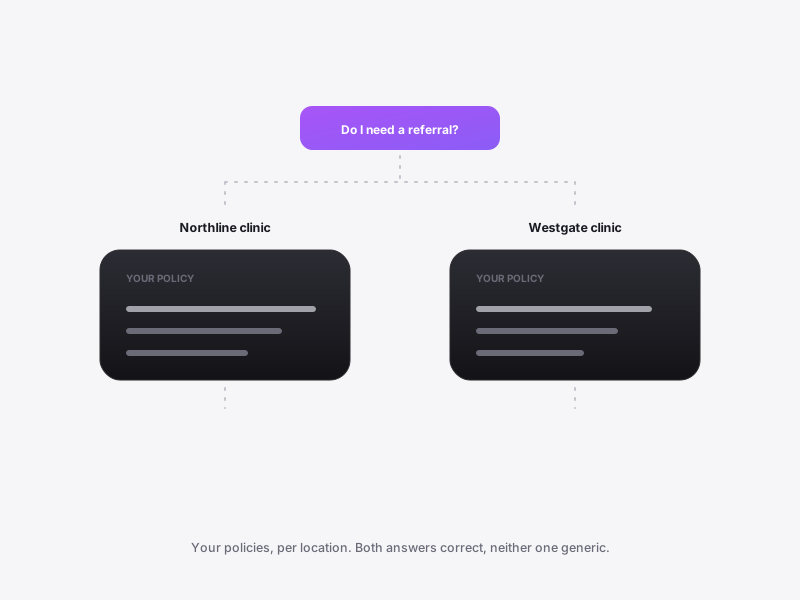
- The agent answers from your own approved content and nothing else: per-location payer lists, referral and direct-access policies, hours and service lines by clinic.
- Outside that content it says so and hands off rather than inventing an answer.
- It stays operational: no injury assessment, no treatment advice.
- Coverage and referral-requirement answers run as deterministic flows, identical on every channel, so your compliance lead can read them before a patient sees them.
Book the evaluation inside the conversation, on your team's real calendars
- Your conversion event is an evaluation on a real calendar, and every step before it is somewhere patients leave.
- The agent qualifies in the conversation, then books in the conversation.
- Patients see live availability computed against your hosts' Google Calendar or Outlook Calendar.
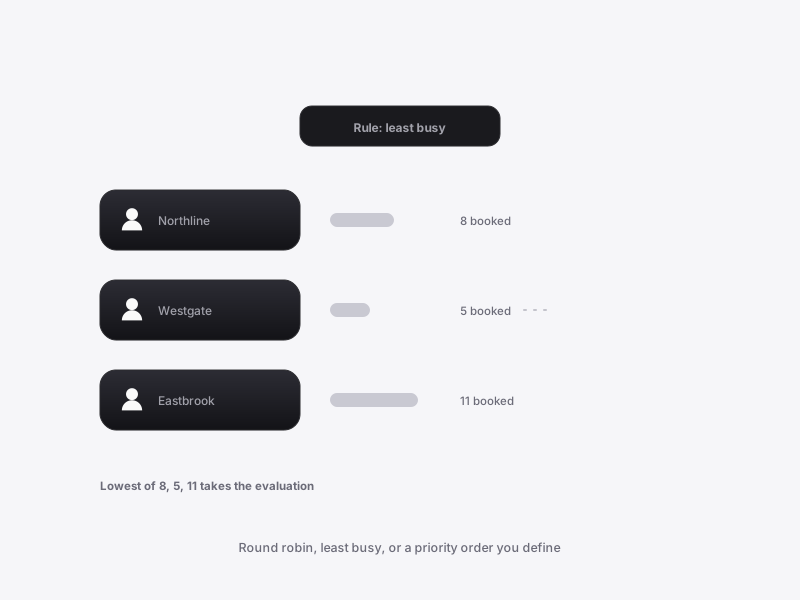
- You set duration, buffer, minimum notice, and working hours. Across clinics or coordinators, slots distribute by round robin, least busy, or a priority order you define.
- The confirmation lands as a real calendar invite. An evaluation on the calendar, from "my doctor said I should start PT".
See which referral sources and campaigns produce booked evaluations
- You win the click and cannot prove the visit, so the budget conversation with your CEO stays anecdotal.
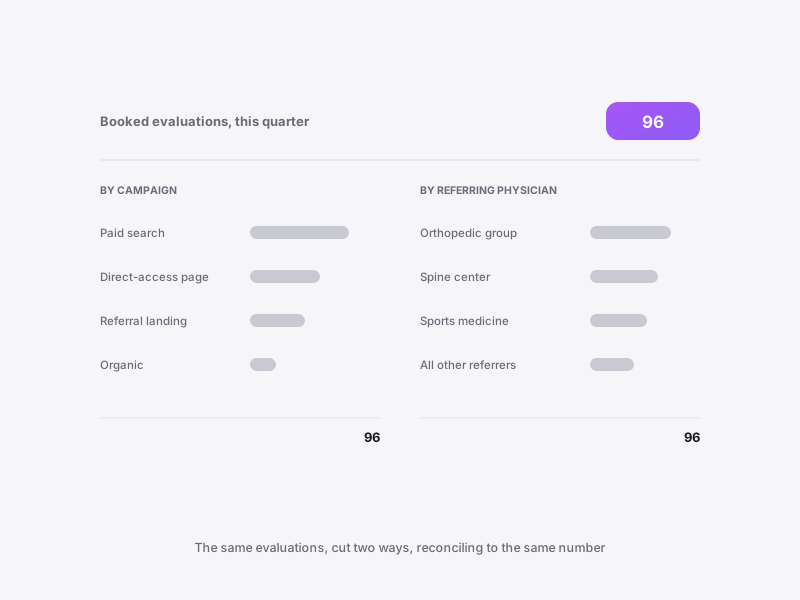
- One analytics home covers it: conversion funnels from visitors to conversations to completed goals.
- Top lead sources break out by UTM source, campaign, and landing page, each with its own conversion rate.
- The referring physician and the preferred clinic are captured fields, so you can follow the same cut through to booked evaluations.
- Every number is clickable down to the conversation that produced it, so your budget defense is built out of booked evaluations.
Prove it works before it goes live on your website
- Your compliance lead wants the insurance and clinical-boundary answers in writing before anyone signs off.
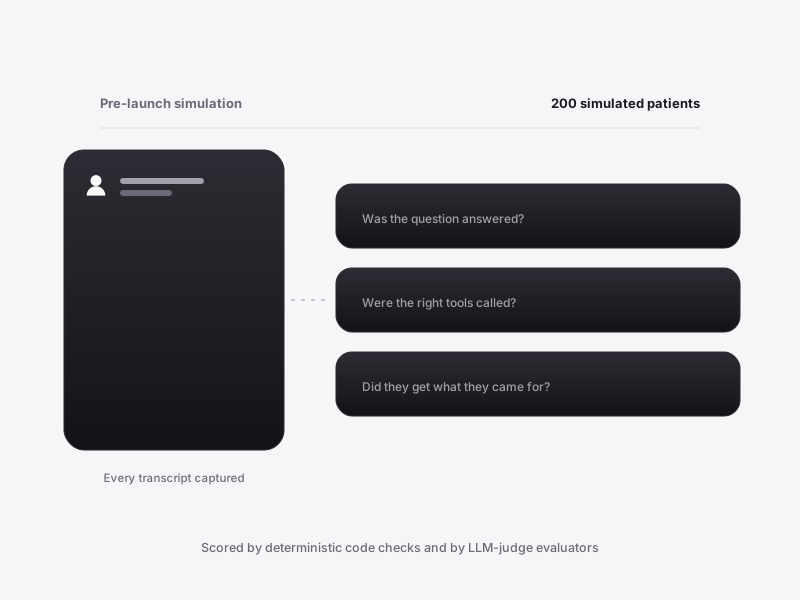
- Tars runs simulated patients against your real agent, personas and goals driving multi-turn conversations, generated from your own content.
- Each is scored by deterministic code checks and by LLM-judge evaluators.
- Evaluators ask whether the question was answered, the right tools were called, and the patient got what they came for.
- You set the thresholds that gate a deployment, and after launch real conversations feed the same loop. Your sign-off meeting reads evidence.
How Tars Agents Get Better

The healthcare acquisition flywheel
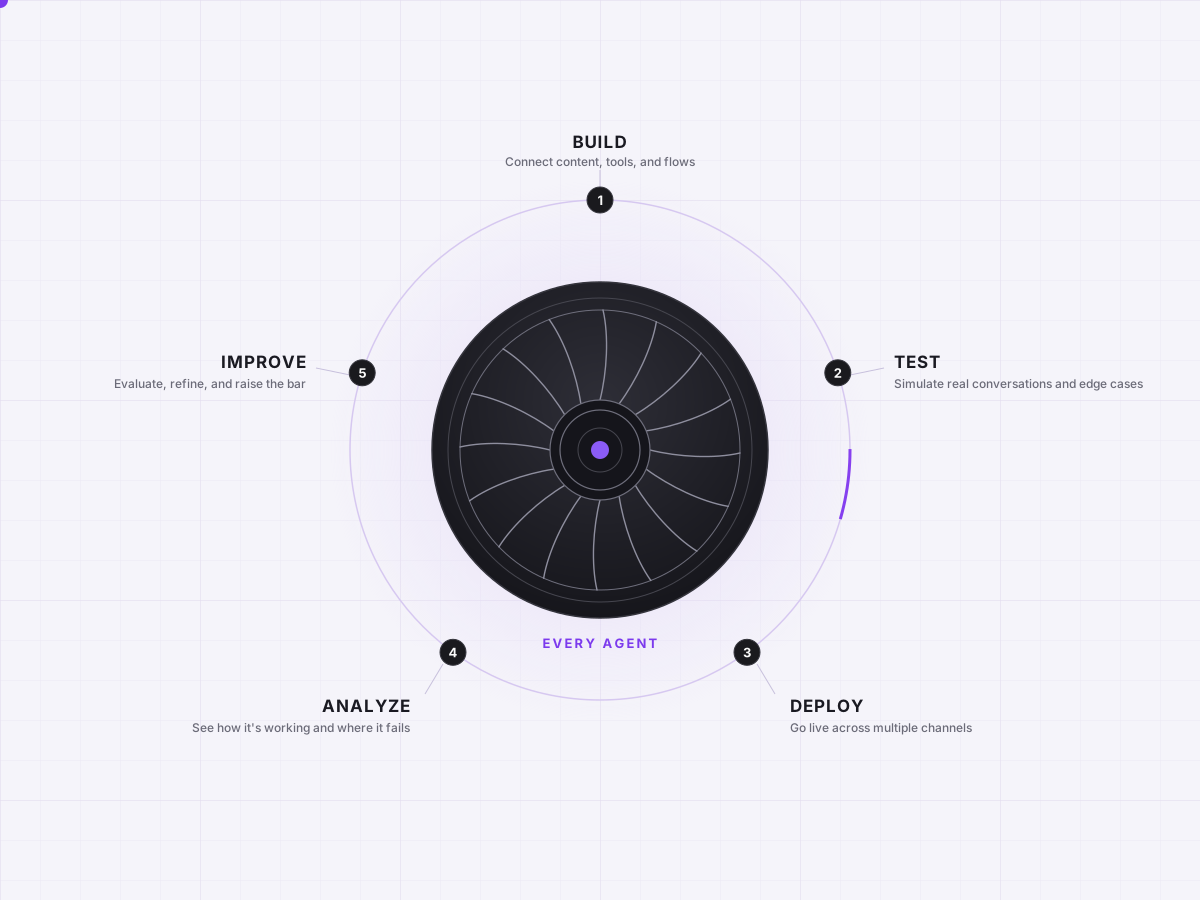
Putting an agent in front of people asking about care is not a click-a-button decision. Your clinical, legal, and marketing leads all have to sign off first. Tars closes the loop end to end. Train, test, deploy, learn, improve. More inquiries answered and more first appointments booked with every cycle.
Step 1: Train
Connect your service lines, locations and provider directory, accepted payers, pricing and policy pages, intake criteria, and past inquiry history. Set the guardrails and the exact wording for sensitive topics. The agent presents your care the way your best intake coordinator does, from your content and your rules.
Step 2: Test
Run simulated inquiries against the agent before launch, including the ones your reviewers are most worried about. Your escalation protocol and clinical-boundary rules become standing evaluators, so you see how the agent behaves on the hard cases before a single visitor does.
Step 3: Deploy
Go live on web, WhatsApp, SMS, and email when the scores clear your threshold, with booking and CRM write-back switched on from day one.
Step 4: Get Insights
See where inquiries drop off, which campaigns and landing pages produce booked appointments, and how conversion differs by location and service line. Every number opens down to the individual conversation behind it.
Step 5: Improve continuously
Close the gaps, re-test, and raise booked appointments month over month. Each cycle converts more of the traffic you are already paying for.



.png)
%201.png)
%201.png)